
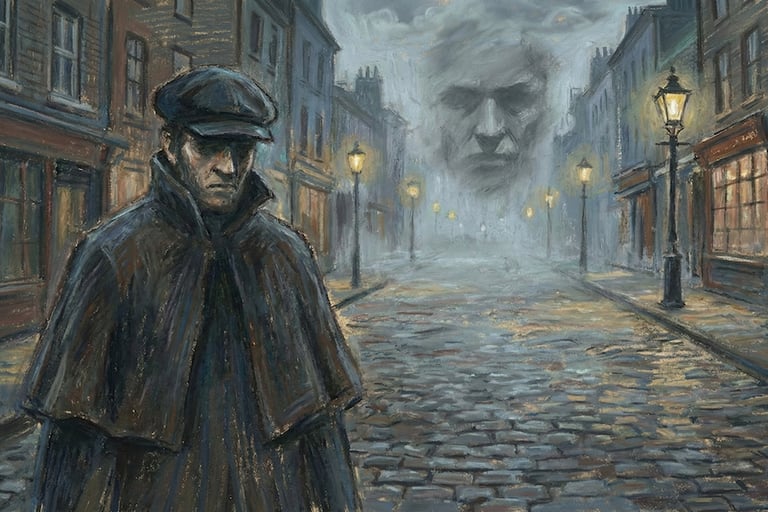
There are few serial killers that time can never seem to bury the brutality and shock value of their crimes, and even in the 21st century we continue to gasp over the violence committed centuries ago. Included on this list of infamous killers is “Jack the Ripper”, which was the pen name given to the murderer who terrorized London in 1888. The identity of this crazed killer had been a mystery up until just a few days ago, when forensic scientists were able to 100% identify the Ripper through DNA sampling 136 years after his murders.
Jack the Ripper was one of England, and the worlds, most infamous serial killers. He killed at least five women in London’s Whitechapel district from August 7 to September 10, 1888. He has since been hauntingly remembered for the unusual way he mutilated his victims bodies. Allegedly, a numerous amount of letters were sent by the Ripper to the London Metropolitan Police Service (also known as Scotland Yard) in which he taunted the detectives about his attacks and speculated on his upcoming kills. The pen name originated from these letters, though the legitimacy of such letters has never been proven. There have been over 100 suspects since the crimes, theories of his identity ranging from accusing famous painters like Walter Sickert to the grandson of Queen Victoria.
Amongst these suspects was Aaron Kosminski, a 23-year-old Polish immigrant who was working as a barber in London and died in a mental institution in 1919. He also happened to be the Scotland Yard’s main suspect at the time of the murders and has been linked to the crimes a number of times since 1888. In 2007, English historian and author Russell Edwards brought a stained silk shawl to Jari Louhelainen, a biochemist at Liverpool John Moores University in the United Kingdom. The shawl belonged to Catherine Eddowes, the killer’s fourth victim, and was found next to her mutilated body in 1888. This shawl was speckled with blood and semen, the latter belonging to the killer himself - Aaron Kosminski. While Edwards actually identified Kosminski as the Ripper in his 2014 book Naming the Ripper, there were claims of a few technical details in the genetic analysis used on the shawl to come to the conclusion. Now, almost 140 years after the murders, forensic scientists have been able to match the DNA of the semen to one of Aaron Kosminski’s living relatives, confirming Kosminski’s identity as “Jack the Ripper”. According to Louhelainen and his colleague David Miller, a reproduction and sperm expert at the University of Leeds in the United Kingdom, this is “the most systematic and most advanced genetic analysis to date regarding the Jack the Ripper murders.” The tests compared fragments of mitochondrial DNA - which is the portion of DNA inherited only from one's mother - which were retrieved from the shawl with samples taken from living descendants of Eddowes and Kosminski. The Journal of Forensic Sciences has confirmed the match to Kosminski’s relative.
While these recent news titles naming Aaron Kosminski as “100% Jack the Ripper”, critics are speculating the legitimacy of the evidence used to confirm Kosminski’s identity. As the Data Protection Act protects the privacy of individuals in the U.K, scientists cannot publish the genetic sequences of the living relatives of Eddowes and Kosminski. Readers and scientists somewhat critic this withholding of information as people like Walther Parson, a forensic scientist at the Institute of Legal Medicine at Innsbruck Medical University in Austria, says mitochondrial DNA sequences pose no risk to privacy and the authors should have included them in the paper identifying Kosminski, as “the reader cannot judge the result” themselves. He also says he “...wonder[s] where science and research are going when we start to avoid showing results but instead present colored boxes.” Other critics say that there is no way to confirm that the shawl hasn’t been contaminated or tampered with over the years since the crimes.
While this is not the first time DNA sampling has been used to try and identify the Ripper, it is the first time any real and concrete evidence has supported the theory that Aaron Kosminski was the true killer. While it might seem like an unimportant discovery as it has been so many years since the crimes occurred, this identification brings closure to the families of the victims of Kosminski’s gruesome and horrific crimes. Karen Miller, the great-great-great-granddaughter of victim Catherine Eddowes, shared with Daily Mail that “Having the real person legally named in a court, which can consider all the evidence, would be a form of justice for the victims…We have got proof. Now, we have this inquest to legally name the killer.”
Furthermore, it is important to remember in light of this discovery and whatever documentaries and Netflix series are created in coming years, these were real people with living families who are affected by the rhetoric and propaganda regarding the murders. Aaron Kosminski’s identification as the infamous “Jack the Ripper” will finally give these families the closure they have been seeking for centuries, and give the world the answers they’ve grasped at since 1888.
Journalism
This newspaper article was one I published in my school newspaper three days after this groundbreaking discovery in the world of forensics and crime.